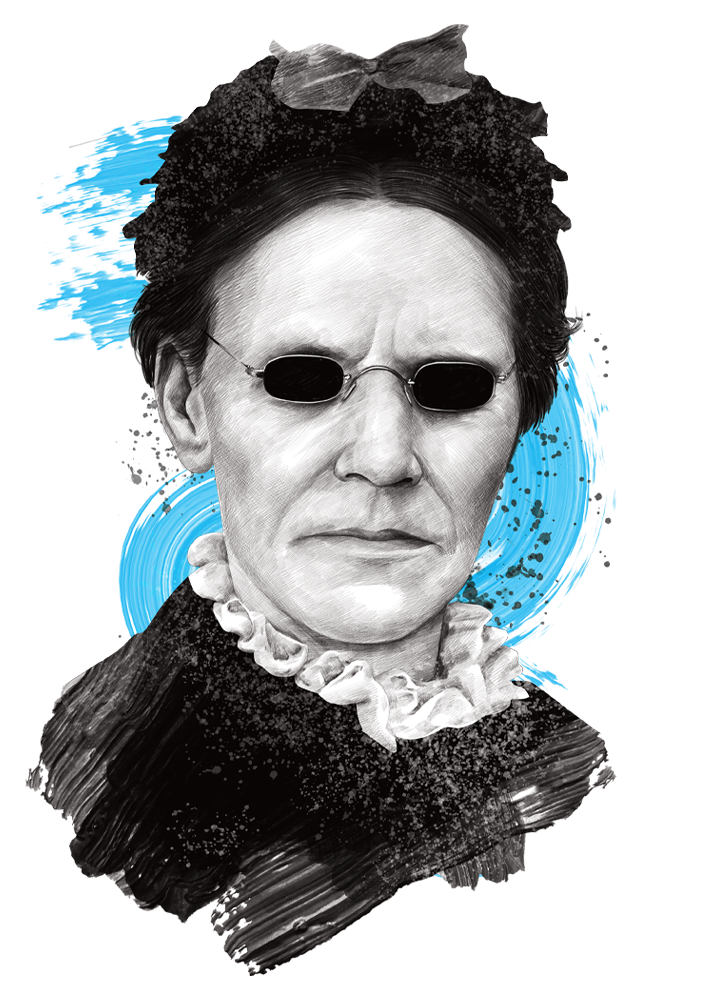
Born in Brewster, New York on March 24, 1820, Fanny Crosby is one of the most prolific hymn writers of all time. Her father was a Puritan who traced his ancestry to William Brewster, a leader of the Plymouth Colony and passenger on the Mayflower ship in 1620. She is also a distant relative of 20th-century singers Bing and Bob Crosby.
At six weeks old, Fanny was blinded either by a home remedy for inflamed eyes or by a congenital dysfunction that went unnoticed by her parents. She faced challenges that would have disheartened many, yet her life became a testament to strength, gratitude, and unshakable faith in God.
She wrote hymns that focused on themes of trust, hope, and the closeness of God. Classic gospel songs such as “Blessed Assurance,” “Rescue the Perishing,” and “To God Be the Glory” revealed her conviction that faith is not merely an understanding but a transforming relationship with Christ. “Blessed Assurance” recorded her spiritual autobiography. The chorus — “This is my story, this is my song” — affirmed her belief that faith shaped every moment of her life.
Behind every verse she penned was a deep personal faith. She memorized extensive sections of Scripture, and even entire books of the Bible.
Fanny Crosby’s faith was not limited to her compositions. She was deeply involved in urban ministry, especially among the poor, homeless, and imprisoned in New York City. She believed that hymns were a means of reaching people’s hearts, but service was an equally essential expression of Christian love. Her visits to rescue missions and prisons inspired many of her hymns. Her love for all people flowed from her belief that every individual, no matter their circumstances, was precious in God’s eyes.
In the summer of 1843, she met Alexander van Alstyne Jr. He was also blind and enrolled at the New York Institute for the Blind, where Fanny taught. They fell in love. After a long engagement, they were married on March 5, 1858. At Alexander’s insistence, Fanny continued to use her family name for her hymns.
In 1902, Alexander died. Then after a six-month-long illness, Fanny died at age 94 of a cerebral hemorrhage on February 12, 1915.
Fanny’s life testifies to how faith can transform adversity into purpose. Her blindness did not hinder her. It sharpened her spiritual vision. Through her hymns, she invited countless believers to experience the same assurance, trust, and hope that empowered her life.
So What?
How have your personal challenges and faith journey come together to influence how you express Christ to others?
Illustration by Paul Ryding. This article was originally titled “Fanny Crosby” in the March 2026 issue of Peer.
You May Also Like