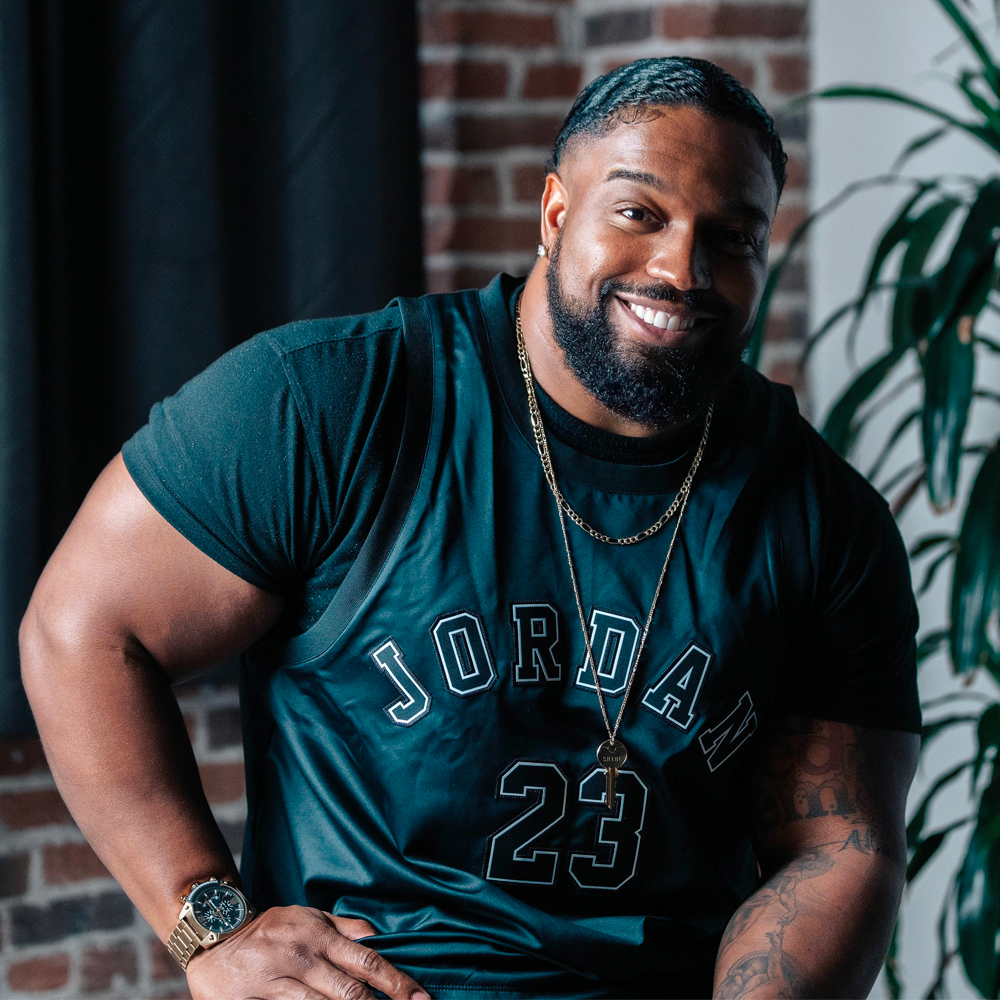
 Image Credit: Donbg Photo Designs
Q&A with Kevin Olusola and Donovan Dee Donnell
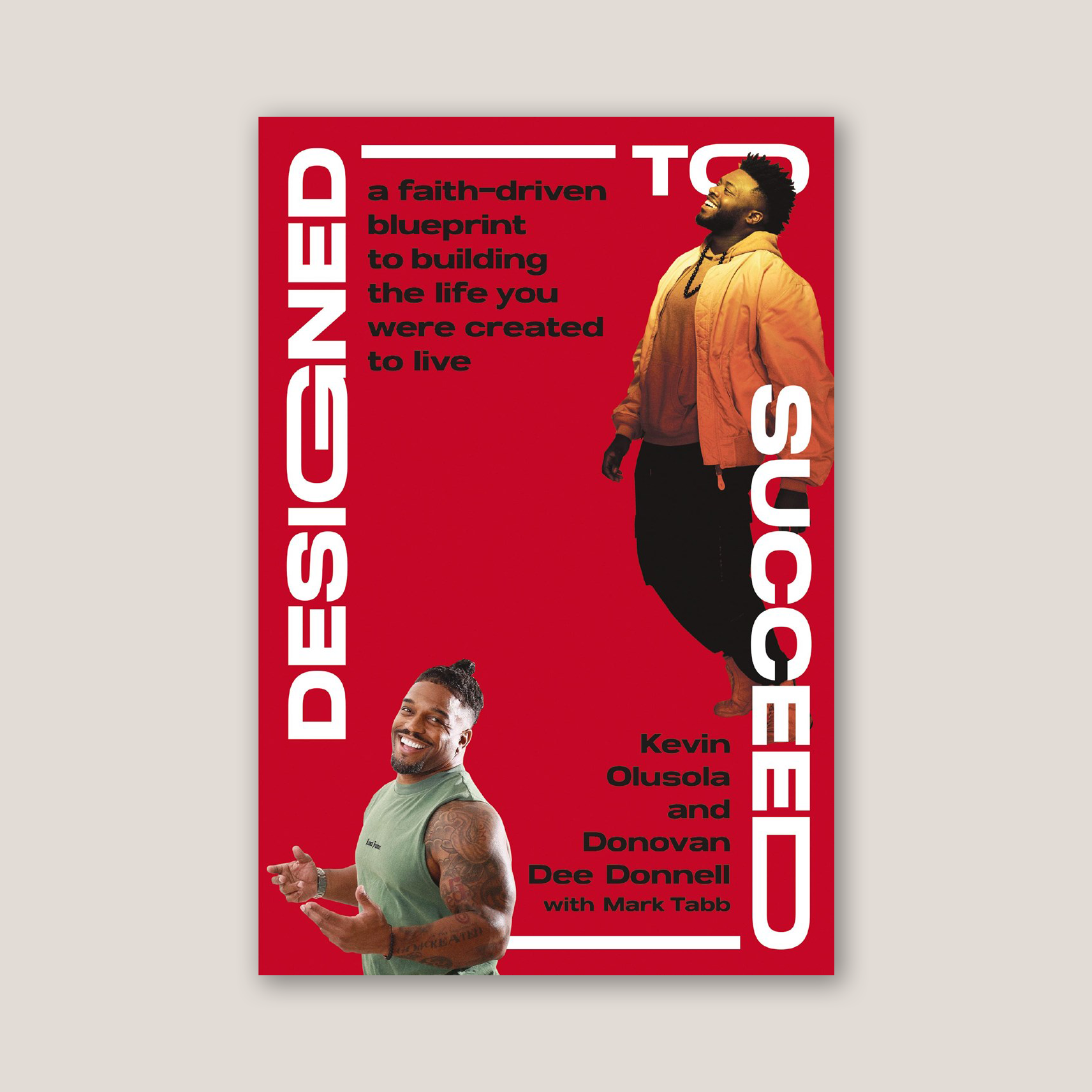
"So don't freak out, don't worry; know that it's an eventual process if you continuously trust in the One that made you for a purpose."Kevin Olusola and Donovan Dee Donnell redefine success with a biblical worldview in their new book, “Designed to Succeed: A Faith-Driven Blueprint to Building the Life You Were Created to Live.” Hitting shelves June 9, they encourage readers to not only think about how the world defines success but turn to what God says instead.
“I’m not doing it for the validation of the world; I’m doing this because this is how God created me to be, and I’m already validated by the One who loved me first,” Kevin shares.
Kevin Olusola is best known as the beat boxer of the Grammy award-winning a cappella quintet Pentatonix. He is also a solo artist who fuses classical music and modern sounds to create a genre of his own. Donovan Dee Donnell is a published author, international life coach, and keynote speaker who is specialized in leadership, entrepreneurship, relationships, personal development, mental health, and suicide prevention. They team up to inspire readers to follow the compass of your identity and emphasizes true success over worldly success.
PEER: What inspired you to write this book? You mentioned you were reluctant authors. What changed your mind?
DONOVAN DONNELL: With the reluctancy to write a book, sometimes in life you can think you’re too busy to do the thing you’ve been called to do. Kevin and I had a lot going on already, and so at the idea, we think through the intentions. But capacity is king, so you may want to do a lot of great things, but do you have the energy, the time, to make sure it’s excellent, that it’s good, that it’s in alignment with how God told you to do things? There was some reluctancy because of what was already on our plate, but through prayer, God ensured us that this needed to be prioritized. I love that because so many things can be important to us, but certain things are urgent. That means they’re time sensitive, and through prayer, God said, no, this is what I want, and this is what I want now. Not in this aggressive tone, but just in this like, hey, this is time sensitive, and so we made space for it.
The reason this book came about is we believe what Ecclesiastes talks about — there’s a time to embrace, a time to refrain from embracing (Ecclesiastes 3). We’re living in a very specific time in humanity. This conversation around success and authenticity is so important because the urge to compromise has increased greatly since the technology boom, since the move of AI. People don’t know it but they’re being guided in a direction away from what they were designed to do, and they’re going to end up in different places, having achieved what the world said is success, but having no fulfillment. Our book is to help people avoid that because that will leave them disheartened, discontented, and in a lot of ways angry with God. We want to make sure that they have true understanding that God has designed a specific path for you, how you are and how unique you are. You don’t have to do what’s trending, you don’t have to be like everybody else, and you can still experience a deep and very satisfying success.
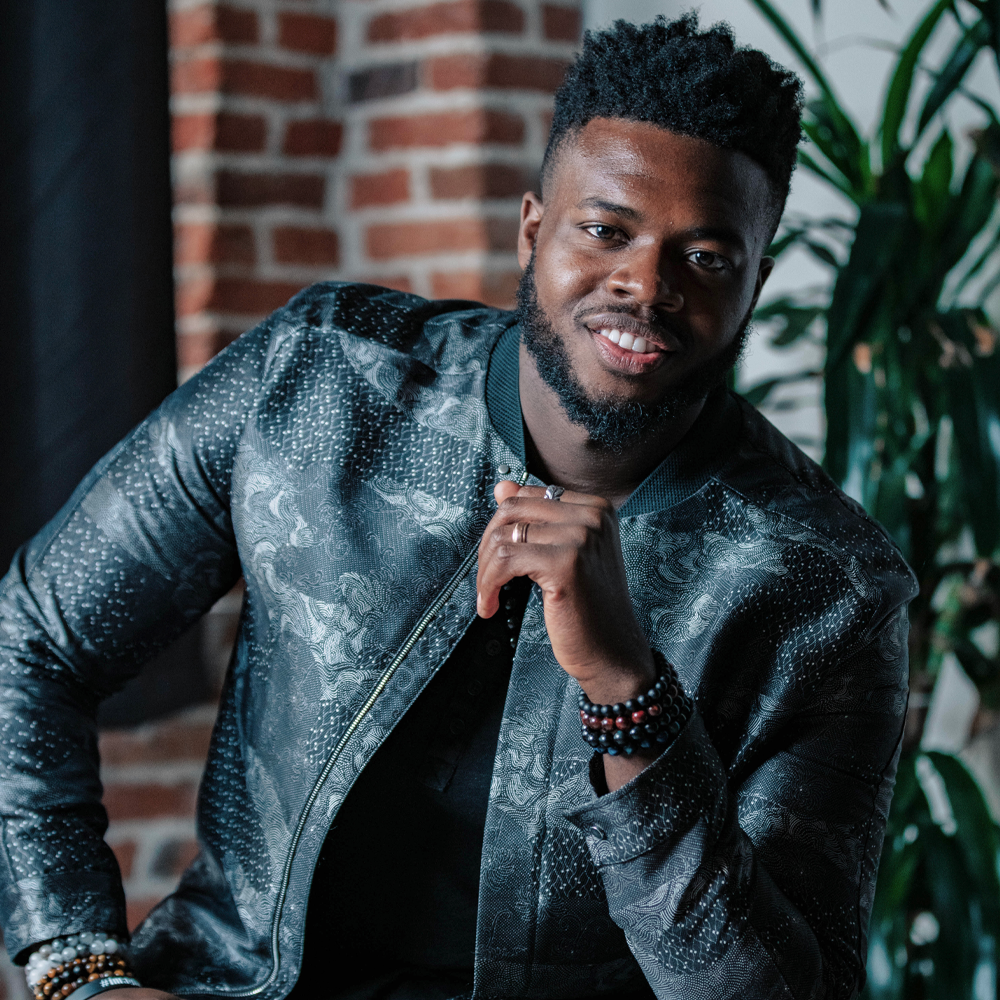
P: Kevin, I’m going to flip this over to you and about your musical path and how this led into your book. How did your faith guide you along your music career, even when others weren’t supportive
KEVIN OLUSOLA: The reason I’m in my musical career at all is because of faith in God. He’s the One that showed me that — even though I had other plans for myself. My dad being from Nigeria, being a psychiatrist, my mom being from Grenada, being a nurse, I spent my whole life growing up that I was going to be a doctor because I really enjoyed that path, having gone to boarding school and having gone to Yale. But God said, “I’ve got something completely different for you,” and I was flabbergasted because I didn’t think I was talented enough to be a musician. I didn’t think I was skilled enough to be a musician. I didn’t have this drive or this desire like a lot of my friends who I knew went into the music industry, who had known since they were single digits or early teens that this is what they wanted to do. I’m 20 years old and God’s calling me to go into music; it didn’t make any sense, but as I realize and I look at the Bible, God equips those that He’s called for a certain path. He equipped me along the way. What really happened was I had two very famous musicians, one named KRS-One, who’s a grandfather of hip-hop, and also Yo-Yo Ma, probably the biggest classical musician in the world, tell me something similar, that my music was inventive and unexpected, and that if I continue to do what I was doing, I may change the way people see hip-hop and classical music. To be fully honest, I didn’t know what to do with that information because it was going against everything that I believed, but then I had a mentor of mine who said, look, you’re 20 years old, you might as well just go ahead and try it, and if anything, you can go back into medicine.
I really want to say this to all the people listening to this, it’s actually okay if you have a plan B, because I think plan Bs give you a freedom and a relaxed state to try your plan A, and that’s what it did for me. I remember I got into my dorm room after that conversation with my mentor; I got on my knees and I said, “God, I feel like what you’re asking me to do sounds crazy to me, but I cannot deny that there is something here that you want me to try and that you’re calling me to, you’re going to have to do it because I cannot see within my own self how this is possible, it’s in your hands.”
From that prayer, I knew it was almost like a can of worms opened and I was sealed for this path. I didn’t know how I was going to do it, but I knew in my heart after I said it, that’s all I need. I didn’t expect all this stuff, of course — the Grammy Awards — but now having written this book with Donovan, I don’t define my success by the world’s rubrics nor I don’t define it by the Grammy Awards and the platinum albums. Sure, maybe for other people, that’s something that they can look to say that you’re successful, but I’m successful because I’m walking with God every single day on this path. I’m finding enjoyment and fulfillment doing what He’s called me to do.
P: Donovan, how has that shift from your former job to being a life coach focused on purpose and faith? What was the moment that inspired you to make that change?
DD: With many jobs I’ve had, I finally transitioned into coaching. Right before coaching, I was a full-time entrepreneur doing photography. Before that, I was a male exotic dancer. I moved to getting a mentor and getting in the word of God. Because I was raised in the church, but coming back to understanding, you may be good at a lot of things, but until you’re doing what you’ve been called to do, things are going to always feel off. I got underneath a mentor who went to a specific church in California, and I fell in love with the church. I fell in love with the church and got really close with the bishop there, and he started a school. They had life coaching classes through the church because their goal was to have a life coach in every church.
By this time, I had written one of my books, and he was like, this might be a field for you. I had said I like this way of helping people. Therapy is good, helping you heal, but someone who walks with you through the rest of the practical parts of now that I’m healed. What do I do with my healing, how do I fulfill purpose now? I feel like I already do this, I just don’t have the right tools to do it. He said, “You have the heart, now you need the training.”
I continued to go through the training of becoming a professional international life coach, and three years later I got my certification, and it made so much sense to me to have the training with the heart. Just because you care about somebody doesn’t mean you know how to care for them. The training taught me how to care for these people who needed a coach, and the reason the transition worked so well for me, because a part of me, recognized that this is what you were born for. It was a moment of recognition that said, you already do this, you already have a heart to do this — let me show you how to do this, and from there, it’s just like this is embedded in me, this was chosen for me before I decided what I wanted to do with my life.
KO: Donovan, how old were you when that happened?
DD: 26.
KO: I think this is really important for those listening to this, because a lot of you are young and trying to understand and figure out purpose. Know that it may not happen within your college careers — it may happen later. He was 26 when he started realizing what God had purposed him to do. I was 20 years old, and I think in a lot of ways in the music industry, that’s very late. When you think of the Olivia Rodrigos or when Chris Brown started, or like the Kid Larois, a lot of them start so much earlier in the music industry. But know that it may come later because He’s trying to develop something in you. When you’re ready to meet your purpose, your character is going to be ready to hold and withstand everything that comes with that. So don’t freak out, don’t worry; know that it’s an eventual process if you continuously trust in the One that made you for a purpose.
P: How did your faith, and more specifically, relationship with God, help you redefine success?
DD: My faith in God helped me to redefine what success was when God took me to the verse that reminded me that before He formed me in my mother’s womb, He knew me and He set me apart. For me, up until that point, success had been all about what I can acquire and what I can obtain. God said what if success was more about what I already gave you and how you stewarded that. I think that was the biggest shift around the idea of being successful. You’re trying to go get what the world says you should get, but what have you done with what God freely gave you? Have you been successfully stewarding that? Because that is what leads to a life that embodies that fulfillment that I think we’re all looking for when it comes to being successful. You have gone out to the world to get all these things but neglected the call on your life, neglected the gift that He had already put inside of you. I think for me, that is where I started to understand that even on the pursuit of success, I can have fulfillment along the way throughout the entire process. It’s not something I have to wait to get because I’m stewarding what He already gave me; I’m moving from success to a deeper sense of success.
Nothing wrong with acquiring more things and things that can help me have an impact or enough money to support my family. Nothing wrong with all that, but it stems from how I am stewarding what has already been given to me. Success has so many different facets, but I think the one that we forget the most that makes these accomplishments so empty feeling is that we’re just not stewarding the gifts that God already gave us.
KO: I say to piggyback off that that I really understand what he means when he says sometimes it’s okay to acquire — but that can’t be the definition. When I started in the music industry, I remember the first time I won a Grammy, I was in a high. I was elated — this unbelievable peak that is in my career that everybody in the world can now look to and say, “I can validate he is a successful musician because I see the trinket.” And the award that everybody recognizes as success, but then every single day after that was a regular day and I still had to do the same work that got me to the Grammys — which was to make music. Once I realized that, I go, well, is this what success is supposed to feel like? Now I’m just doing the daily grind and I don’t have the same feeling that I got whenever I got the Grammy? I thought everything was going to be solved. That’s when I had to start thinking about what success looks like.
I realized for me, just like Donovan was saying, it’s doing what I’m supposed to do in God’s eyes daily while enjoying the person God’s called me to be daily. I think there is this continual confluence of knowing who you are. Who would I be if I wasn’t doing? Who am I when I’m not doing something? That’s a hard question because a lot of us define success by what we do. What’s the first question you ask when you meet somebody? What is it that you do? Not who are you? If I wasn’t doing what I’m supposed to do, who am I? When I realized I’m a worshiper of God, that is the thing that fulfills me to my core. Why? Because I know what He did for me and I am undeserving of that level of grace. Now that I understand who I am, I now want to express that grace through everything I do, and that is a daily enjoyment. When I connect with God and I go, “Oh my goodness, Lord, what you have done for me,” I need to express this through music, I need to express this through being a husband, I need to express this through being a father. Now every day is an adventure with God because I get to express daily who I am because of what He’s done for me, and that is, to me, the truest feeling of success.
P: Can you elaborate on what that compass of identity means and what it could mean for young people?
KO: With your character and personality, there are probably times where people have said, “Hey, when you do that, that’s kind of uncanny.” Pay attention to those things because that may be a little bit of an indicator that helps you see that you had this gift. I think that it’s helpful not to necessarily put your stock in and say, well, this is what I’m going to do, but as information and data that you can give back to your Creator and ask the Creator, how does this all work? That’s the first thing. There are things that I think that you’re like just kind of good at.
The second thing is being in your Word daily because God will help you understand whose you are and what you’ve purposed to be. You’re chosen to be somebody who loves God and loves people, and now all you’re trying to do is figure out how to do that, but if you don’t know who you are through the Bible, it’s hard to figure out how to live out this life of purpose. I think once you start doing that, it’s about starting to take educated guesses about things you could possibly do. We have our own plans, but the Lord is the one that ordains the footsteps. Go ahead and say, “I’m going to take a step in faith,” because faith is the evidence of things not seen yet hoped for (Hebrews 11:1). Know and trust and believe that God — through people, through mentors, through His Word, through that sense that He gives through the Holy Spirit— will direct you and show you where you’re supposed to go as you take each educated guess.
DD: There’s a quote that says that if you don’t know or if you don’t learn the purpose of a thing, abuse is inevitable. I think that some people are in their careers and they got there through an abusive path. Some people are married and they got there through an abusive path; they didn’t know their purpose and it impacted not only what they chose to do, who they chose to do it with, but how it’s going to feel.
For me, I think when it comes to big questions like identity and purpose, it makes sense to talk to the One who created them, to talk to the One who gave those to you, who made me. The person who made you, the God, the full Creator who made you, gave you identity and gave you purpose. So instead of trying to figure it out on your own, go to the source, the one who made it.
I can see a really good book, and I can use that book to balance my table because my table is wobbly. And it works. This book works great as a leveler, but there’s so much beauty in that content of that book, and you never open it because you didn’t know the purpose of the book was to read the pages. You thought it was just to balance something. So you can be doing that with your own identity, with your own life, with your own energy, your own effort, your own time — misusing it totally, but it looks like it’s working, but not at its full capacity, not its full potential. From a practical way, I would say in order to talk to God about those things, you have to pray. Pray and get in His Word and then be silent. Like my mentor told me, it’s not a monologue — it’s a dialogue. You say what you want to say, and then prayer could be now five minutes of you listening. I think that’s a great way to start to identify who you are and what you’ve been called to do.
P: How can people find the balance between looking toward the future and staying in the present?
KO: I don’t think it’s wrong for us to have goals, but they have to be rooted by our present, and they have to be rooted in our faith.
I remember I knew one day I wanted to make my own album, but there were so many things for me to learn — things that I didn’t even realize I needed to learn. For example, how to write a song — how to write a good song — and not only that, what are the kind of songs that really speak to me? What are the kind of lyrics and stories that speak to me? In a lot of ways, I think it was because I didn’t have the right context, it was frustrating, because I thought it had to be done in this kind of timeline. Well, no. Right now I’m uncovering who I am, and if I gave myself that context, this would have been 10 years of a beautiful journey of me learning and having that context. That’s why I think being present and knowing that I’m going to learn some things in the present day that’s going to be really helpful to my future, that eventually one day certain things will come. But I won’t allow the timeline of the world to tell me how I’m going to go about my business.
God’s trying to put in you a character and a skill that will be able to withstand the purpose that He’s called you for. It’s like a half-baked turkey. I can see that it’s somewhat baked, but then I cut into it and it’s missing the flavor and juices, because I didn’t give it the time that it really needed so that whenever I take a bite of that turkey, it’s not as savory as possible. Allow the timeline that God has prescribed for you to be in its fullness, because that’s what’s going to be to your best interest.
DD: The present is very connected to the future. There’s already a consequence assigned to every single choice. They’re connected, but one comes before the other, and so give priority to the one that comes first and then give thought to the one that comes second. Even though I can’t choose the consequence, I can choose with the consequence in mind; being present means that I’m making a decision. But from all the choices I had, I’m making a decision that I think is going to yield the kind of outcome that I really want, the one that’s going to please God, the one that’s going to help me be the most aligned. For me, that looks like I’m intentional and disciplined in my present, but I have hope for the future. Remembering they’re connected and that the future is relying on or looking to today to be informed on how to behave helps me to understand where most of my attention and my effort need to go. Then my hope is in the future because we don’t know what’s going to happen, but we’re operating from biblical principles. God said, if you do this, then this will come to pass, and so my hope is for the future, but my intentional effort is always focused on the present.
P: How has your definition of success changed since writing this book?
DD: My goodness, it has changed so much. Growing up in Los Angeles, my definition of success had a lot to do with awards, had a lot to do with recognition, had a lot to do with how much fame and fortune I could acquire. Not acquiring those things at an early age left me feeling very unsuccessful and disappointed in life. I was upset with the industry. Everybody told me that I deserve it because I’m great at this. I’ve been in acting classes, and I’ve been in speech meets since I was in first grade, and then over time, that definition of success grew to just making my mom proud. Just want to make sure she was proud, only to get older and recognize my mom said there’s nothing you could do to make me prouder than being my son. I said, okay well, my grandfather passed away and he said, take care of my family. So that’s if I do that, then I will be successful, and so I put my whole heart towards just making sure that I took care of his family. But after he passed away, I was like wait, so who was his family, because a lot of people loved him and a lot of people relied on him. I’m like, I didn’t know how to actually achieve that and be successful at it.
Then it was through working, going to Kevin’s Bible study, partnering with him, having these deep conversations about the struggle of purpose, the struggle of identity, the struggle of success, that I did what I just told you guys to do in that last question. I had to go to God and say, what could I actually achieve in this life that would feel worth it, and that is when I got the revelation that if your purpose is the reason you live, it should also be the reason you’re willing to die, so what are you willing to die for? That is what led me to this place of seeking God to understand what He created me for and that I could put my whole life to. Jesus did not achieve a lot of the things that I formerly thought would make a person successful, but did He accomplish His purpose, and was it done by 33? A lot of these other things that people say you need in order to be successful, and for me, that just further confirmed that it is the fulfillment of my purpose, and it is looking at what God already gave me, doing my best to honor Him with my gifts. If I get 80 years to do it or if I get 25 years to do it, it would be enough, and I would hear the words that we all want to hear as believers, which is, “Well done, good and faithful servant.”
KO: I agree with all of that. I used to think of success because, of course, I went to Phillips Academy Andover and I went to Yale for undergrad, so to me, success was doing the things that looked extremely impressive to everybody else. Going into consulting or going to Goldman Sachs, working and being a National Merit Scholar and then becoming a Rhodes Scholar or Marshall Scholar — that’s a thing that was applauded by everybody. But then realizing God is calling me to go into music. There’s no guarantee that I’m going to get the validation of the world. It’s a really hard job. There’s no guarantee of financial security, which my parents fought for me to have by them coming from Nigeria and Grenada, wanting to come to this country where that possibility is real for me, but then realizing it’s less about being validated by the world, but being validated by God because He’s already validated me. If I’m here, if I’m a being, if I am on this earth, He’s already loved me and I’m already pre-approved for His grace. If I knew that, what would success feel like knowing that I could really do anything He’s called me for, how would that really feel? I wouldn’t feel the shame; I wouldn’t need the world’s validation because I already have the greatest validation that I could ever need. That’s why I now love doing music, because I’m doing it, again, as I talked about, from this place of expressing this joy and expressing this love and faith that I have in God, but again, done in my own unique design.
I’m a kid that takes classical music and puts some crazy modern sounds on it, and somehow that’s supposed to work. I hadn’t really heard that before. You take cello and beatboxing, putting them together— well, that’s weird, I’ve never heard that before. The classical world doesn’t understand this; the hip-hop world doesn’t understand this. I’m not doing it for the validation of the world; I’m doing this because this is how God created me to be, and I’m already validated by the One who loved me first. I’m here to express who I am, and then whoever finds it, let them find it because at the end of the day, as Donovan said, my hope is that I get a well done, good and faithful servant at the end of it. It’s an eternal perspective of success, not a worldly one.
P: What’s one key lesson that you want readers to walk away with when they finish the book?
KO: I want them to feel a sense of relief that they’ve not missed the boat. I understand being in this age range, you’re probably in high school or in college or just graduated, there’s a sense of anxiety, there’s a sense of angst. There’s so much that I can do on this earth, there’s so much I can do to make my parents look at me and think I’m successful. There are different ways people talk about success on social media and it can feel anxiety-inducing. I want you all to feel a sense of calm. You have not missed the boat — you’re right where you need to be, and God Almighty, who has called you to life and has called you for purpose, has a plan if you’re willing to step out in faith to walk with Him every single step.
That’s the first thing, and then I think in a practical step, one thing I hope people get from this as well is take some time daily to do a reflection process. I hope you get that because a lot of times we move through life not really reflecting on our past and in our days and how we can be better for the King of Kings who loves us. If we don’t do that, there’s a lot of information and data that we could be missing out on our path of purpose. I think finding out how you can start to create that daily reflection process that allows you to go, how was my day, did I align to Christ, was my day the best that I could be, what are a few things that I can try to do tomorrow that’ll make me feel more aligned with my purpose, how do I love my people well? I think if you incorporate those reflective questions, you’re going to be light years ahead of where you thought you could be.
DD: I think that if there’s anything I would love for the readers to walk away with after they read this book is a true and deep understanding of how connected alignment is to success, and then also a plan to get aligned. I think that if they walk away with that, then they will begin to see the reason why God had us to write this book in this time.
Kevin and Donovan’s book, “Designed to Succeed: A Faith-Driven Blueprint to Building the Life You Were Created to Live” hit shelves on June 9, 2026. Follow Kevin on Instagram @kolusola and Donovan @donovandeedonnell.
You May Also Like