Bed and Bread Club
"Because of the Bed & Bread program, families like hers don’t just find shelter — they find hope, dignity and a fresh start."The Bed & Bread Club is a ministry within The Salvation Army of metro Detroit that is dedicated to feeding and sheltering the most vulnerable residents in southeast Michigan. Peer recently reached out to The Salvation Army Great Lakes Division to learn more about the program.
PEER: What is the Bed and Bread Club? How does it provide hunger relief and homelessness support in Detroit?
The Salvation Army of Metro Detroit’s Bed & Bread program provides food and shelter 365 days a year. When someone donates $120 or more to the program, they join the “Club That’s Here for Good.” The Bed & Bread program serves more than 4,500 meals a day and nearly 200 people find a safe place to sleep at night. That adds up to more than 1.6 million meals and more than 71,000 nights of shelter in one year. These are not just statistics — these are neighbors, families and seniors in need.
P: When did the program start? How has its mission evolved since the early days?
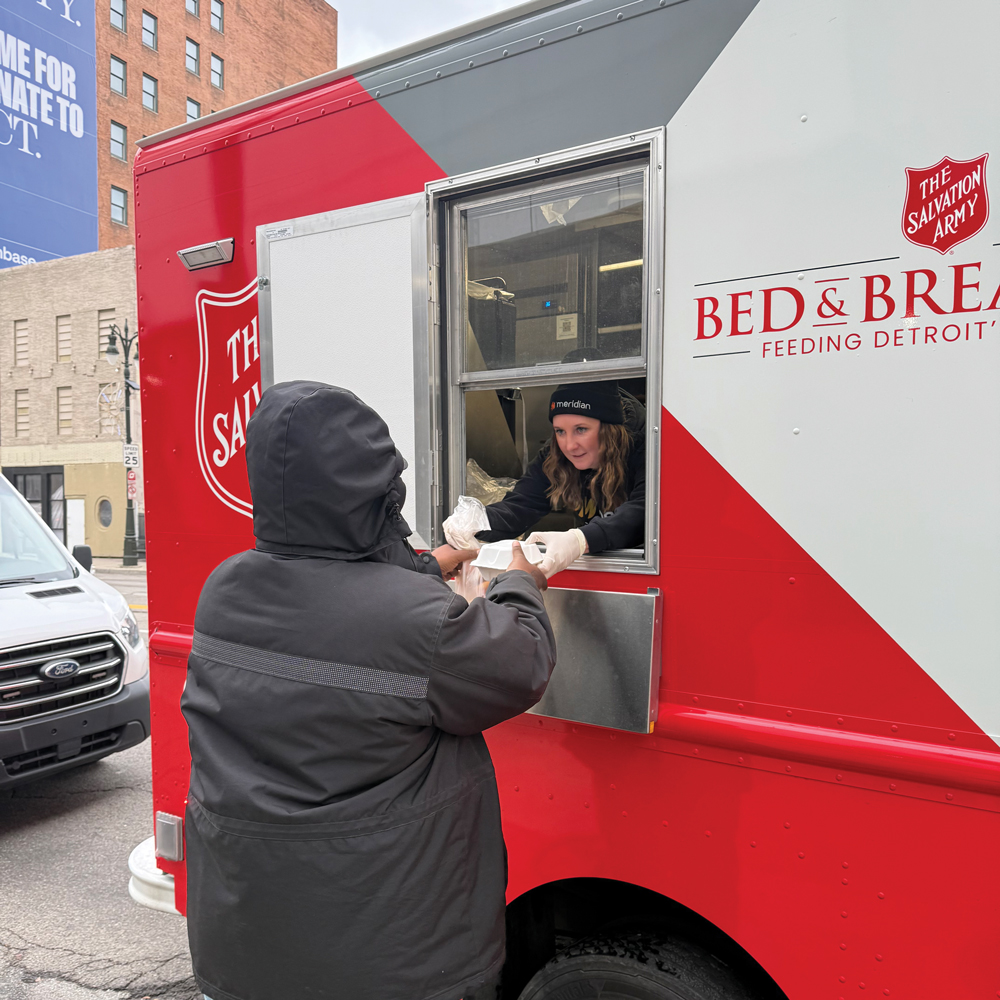
The Salvation Army’s Bed & Bread program began one night in January 1988 when an emergency disaster services truck loaded up with 75 sandwiches, soup, and hot chocolate. The truck parked at the corner of Kercheval and St. Jean in Detroit to directly serve those in need. Over the years, the Bed & Bread program has expanded to operate year-round with its three Bed & Bread trucks making designated stops across the city of Detroit to deliver nutritious meals. These trucks have three routes totaling 60 stops on the east side, west side and neighborhoods of Detroit. Additionally, the program includes multiple shelters in Detroit, Monroe and Warren, Michigan, to provide a safe place to stay for those experiencing homelessness.
P: How many volunteers does it take to keep daily operations running smoothly?
Last year (2025), nearly 2,000 volunteers donated their time and talent to the Bed & Bread program. That’s more than 5,600 hours in one year preparing and distributing meals to those experiencing food insecurity and homelessness.
P: How many meals do the program provide on an average day? Through its mobile outreach?
The Salvation Army’s Bed & Bread program serves more than 4,500 meals every day — that’s through the Bed & Bread trucks as well as in its shelters. That’s more than 1.6 million meals served every year to those experiencing food insecurity. Those who come to the trucks aren’t just homeless individuals — these are working individuals and families who struggle to make ends meet. Often, these meals are the only thing people eat in a day, as some need to make difficult choices like keeping the lights on in their home or putting a warm meal on the table. During the summer, there’s an increase in the number of children coming to Bed & Bread trucks to receive a meal because they’re not getting their nutrition through free breakfasts and lunches at school.
P: How does the program address needs beyond hunger, like clothing, warmth, or shelter?
During the cold, harsh winter months in Michigan, the Bed & Bread trucks distribute essential items such as hats, gloves, coats and blankets to those receiving meals. The Bed & Bread program also provides nearly 200 nights of shelter to those seeking a safe place for people to stay through its shelters in Monroe, Warren and Detroit.
P: Can you share a recent story that describes the program’s impact?
After fleeing domestic violence, a woman and her children found safety at The Salvation Army’s family shelter in December 2024. She had once stayed at the shelter more than 20 years ago and knew it was a place that could help her rebuild. For the past three years, her children have experienced homelessness — living in one room and doing their best to stay hopeful. As a mother of children with disabilities, one of the hardest parts has been watching them feel confined and long for a place to call their own. While in the shelter, she worked to regain employment and stayed focused on her ultimate goal: permanent housing. Even during her own hardship, she helped other residents — giving rides, sharing clothing and encouraging others. Through women’s groups, prayer and the support of staff, she held onto faith and patience. After months of waiting, she was recently selected for a housing voucher and is now beginning the process of moving into a home of her own. Soon, her children will have bedrooms, a kitchen, and stability again — something they have not had in years. Because of the Bed & Bread program, families like hers don’t just find shelter — they find hope, dignity and a fresh start.
P: What type of volunteer work is most needed right now? How can young adults get involved?
The Bed & Bread program isn’t seasonal. It provides food and shelter 365 days a year, no matter the weather. Volunteers are a meaningful part of the program, and often the request to volunteer exceeds availability, which reflects strong community support.
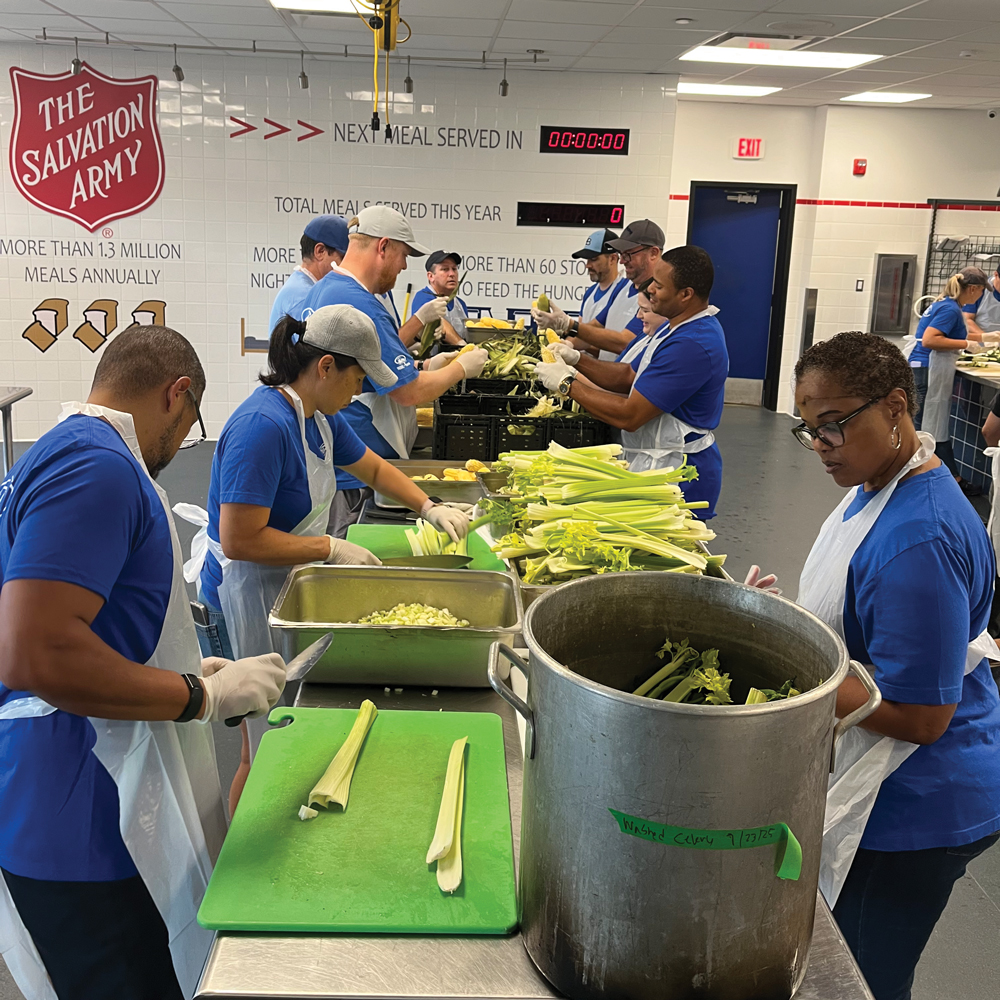
There are two different ways to volunteer in the program. Volunteers are needed throughout the week to support the Bed & Bread trucks’ daily distribution on the streets of Detroit. Individuals can donate their time in the Harbor Light kitchen, two shifts a day: 8 a.m. to 11 a.m. and 11:30 a.m. to 2:30 p.m. Those who are 18 or older can volunteer in the kitchen. Those interested in distributing meals through the Bed & Bread truck can do so seven days a week from 11:30 a.m. to 6 p.m. There are three truck routes, and each truck can accommodate two volunteers. Those who are 13 or older can volunteer on the truck. Minors must be accompanied by an adult. Typical volunteer duties include interacting with clients from inside the truck, pouring hot chocolate and water, preparing and packaging meals, and handing them out to those coming up to the Bed & Bread truck.
P: How does the annual Radiothon impact the program? Can you share about what the Radiothon is and how it got started?
The Bed & Bread Club Radiothon is the primary source of funding for the Bed & Bread program. Every dollar raised stays local and provides food, shelter and warm winter accessories (hats, gloves, coats and blankets) to Detroit’s most vulnerable population. Just one month after the program’s start in January 1988, radio hall of famer Dick Purtan teamed up with his longtime producer Gene Tayor to begin the Bed & Bread Club Radiothon to support the Bed & Bread program. The first Radiothon aired on WKQI-FM and raised $15,000 in just four hours. That following year, the Radiothon extended to a 16-hour format. Almost 40 years later, the Radiothon now airs on 760 WJR and encourages the community to support the Bed & Bread program through a 27-hour format. Since 1988, the Radiothon has raised $47,421,131 to support Detroiters in need.
P: Is there anything exciting in the works with the Club/ministry?
The Salvation Army has expanded its partnership with Make Food Not Waste that unites food rescue, culinary expertise and large-scale meal distribution to reduce food waste while improving the quality, nutrition and efficiency of meals served to individuals experiencing food insecurity and housing instability. Together, the organizations leverage their distinct strengths to create a sustainable model that advances both environmental and social impact. Since the partnership began in January 2023, Make Food Not Waste and The Salvation Army have had a measurable impact with a 25% reduction in food costs. Hundreds of pounds of food have been diverted from landfills to deliver quality, nutritious meals to shelter residents and Bed & Bread truck clients. Meals like watermelon tomato gazpacho, lasagna soup or chicken pasta can be found on the menu.
Photos/ The Salvation Army Great Lakes Division
What’s New with Crest Books?
Looking for a new devotional? Major Ed Forster, a former national literary secretary and editor-in-chief of The War Cry USA, released a new book on everyday sayings from the Bible.
“Sweeter Than Honey” is the description King David used in referring to the words of God in both Psalm 19:10 and Psalm 119:103. This book, like Forster’s previous book on etymology, “101 Everyday Sayings from the Bible,” focuses on expressions that people use regularly without realizing they are from the Bible, like “all things are possible,” “by the skin of your teeth” and “face-to-face.” The best-selling book of all time, the Bible, still influences everyday life around the world through use of expressions that are commonly used in conversation in countless languages.
To shop this book, visit crestbooks.com.
25 Years Later, We Won’t Forget
Immediately following the attacks on the World Trade Center in New York and the Pentagon in Washington D.C. on September 11, 2001, The Salvation Army deployed officers, soldiers, advisory board members, employees, and volunteers to the sites.
25 years later, Salvationists who served on that day and in the months afterward reflect on their experiences. Read more observations in “September Morn,” found in the September issue of The War Cry.
“Here in the Greater New York Division, we immediately had our Emergency Disaster Services Command Center activated to oversee vehicles and personnel. The Army was the first response agency on site in the Zone within an hour and remained on site until the Honor Guard removed beams and flags from The Pit nine months later. The first canteen was joined by 18 others strategically placed throughout the Zone. In addition, three tractor trailers towing commercial kitchens joined the response and fed around the clock.”
— Major Carl Schoch (East), “September Morn.”
Pendel Music Arts Presents “West of Eden”
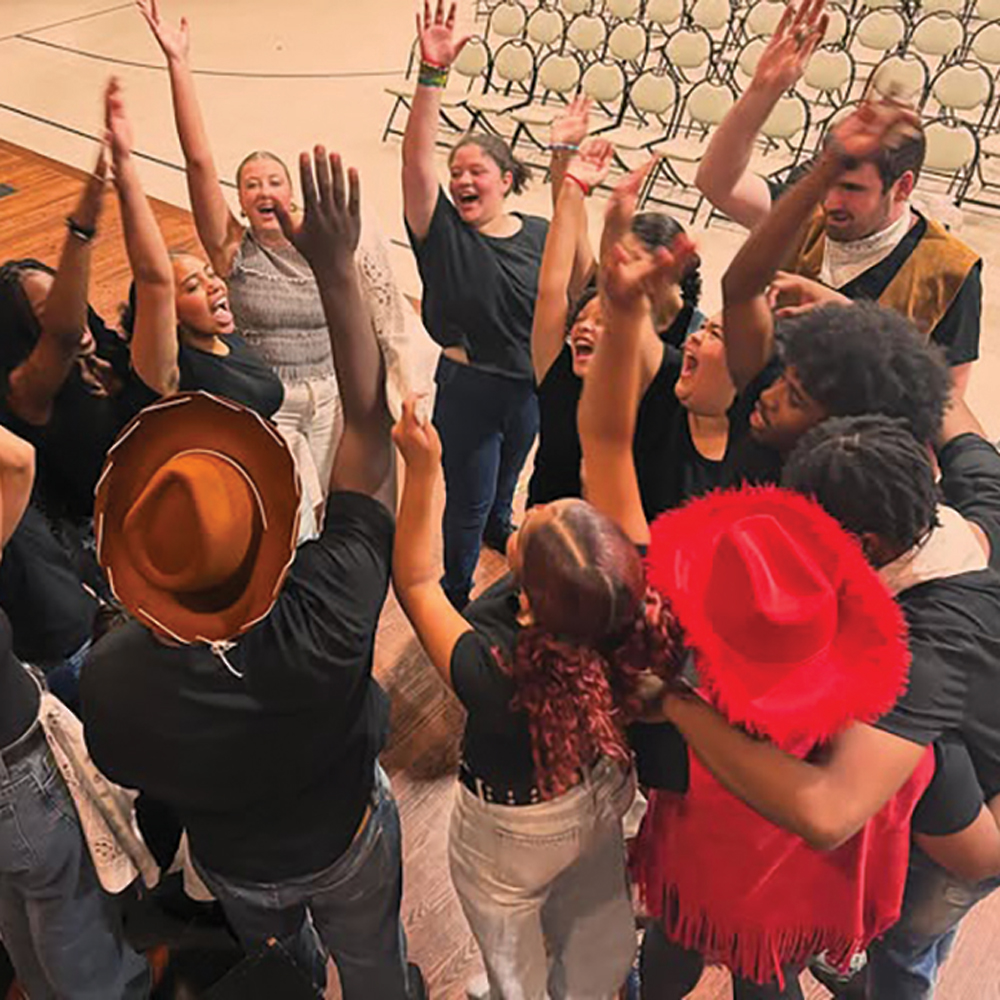
This past summer, the Pendel Music Arts presented a new Jesus Theater production called “West of Eden” but with an extra twist: they made it Western!
Camp staff members at Camp Ladore in Pennsylvania were excited to present this production to campers this past summer.
Jesus Theater is a creative arts presentation of the gospel of Jesus Christ, originally created for camp ministries. It began in 2014 in the Eastern Territory, under the leadership of Katie Luse, and has since expanded to every territory in the U.S. Since 2014, camps in the Eastern Territory have recorded thousands of lives committed to Jesus because of the ministry of Jesus Theater.
To learn more about Jesus Theater, visit peermag.org/articles/jesus-theater.
You May Also Like