 Image Credit: Illustrations by Kristina Astakhova via Getty Images
Watering and Waiting
"Beginnings excite us and endings satisfy us, but the in-between is home to formation."What comes to mind when you think about beginnings? Nervous jitters on the first day of school? A cursor blinking on a blank screen, waiting for words to fill the page? Maybe a seed — hidden and buried deep but bursting with the promise of potential. New beginnings bring excitement, anticipation for what will unfold, and dreams of final products tied up with neat bows. But almost instantly, the excitement mixes with unease. “What if I don’t measure up?” “What if it looks different from what I anticipated?” “What if the applause never comes?” The pressure makes you wonder why you began in the first place.
In a world that equates success with speed, we often seek to skip to the finish line. We obsess with the “after” picture — the framed painting, the degree in hand, or the garden blooming with life. But stepping into the work God calls us to is worth the unkempt “before” — the messy middles and dirt beneath our nails. This work doesn’t happen overnight. It emerges slowly, in iterations, but all the while under God’s watchful care.
In 1 Corinthians 3:6, Paul writes, “I planted, Apollos watered, but God gave the growth” (ESV). The simple metaphor offers a profound truth. We show up faithfully, day after day, but ultimately, the transformation belongs to God. Waiting, then, is not an incidental byproduct; it is a necessary part of the creative process. God invites us into this process, not as independent artists grasping for control but as co-creators trusting in the One who brings our small beginnings to life.
Whether you’re starting a new semester, a skill, or a friendship, Scripture welcomes us to see both our work and our waiting as acts of collaboration with the Creator Himself.
If you find yourself stuck in the messy middle, unsure about new beginnings, remind yourself of the Artist behind it all — the anchor who invites us to create and pours abundance into us to grow into the creators we were designed to be.
1. Acknowledge the Artist Behind It All
The opening scene of Scripture portrays the Artist at work (Genesis 1:1-25). At the dawn of creation, God painted the cosmos into existence. He didn’t rush. He shaped light and land, birds and beasts, and called His creation “good.”
Before any of us ever sketched, sang, or studied, God was the first Artist.
Understanding God as the Artist informs the way we view our own efforts. The pinnacle of God’s creation wasn’t white sand beaches or majestic mountain peaks — it was us. God created humankind “in his own image” (Genesis 1:27, NIV). Like a mirror, humankind reflects certain aspects of God’s nature, from the capacity for reason to the ability to create. This unique status comes with a unique assignment. Part of bearing the image of God means acting as stewards, tending to and caring for the world around us.
The call to create is not exclusive to those with training in the fine arts. Every person is God’s workmanship and has been created in Christ Jesus for good works (Ephesians 2:10). As a result, every study session, every attempt at hospitality, every brave idea to better another becomes an echo of His original “Let there be.” When we create anything, we participate in something sacred.
2. Accept the Invitation to Co-Create
God’s work as the Artist extends far beyond the garden. The same Spirit who hovered over the waters still moves. He continues to bring renewal and redemption in both nature and the human heart. We see this each spring when buds break through the soil. The stories of those once trapped in despair now awake to a living hope. God’s grand narrative of redemption continues to unfold, and we are invited to play a part.
God is all sufficient. While He does not need our participation to accomplish His purposes, He invites us into the process. In 1 Corinthians, the people of Corinth were dividing their loyalties between Paul and Apollos — and missing the point. Paul redirects their focus: It’s not about the workers; it’s about the One who brings transformation. Still, the workers matter. They have seeds to plant, fields to tend to, and projects to begin.
Paul’s words in 1 Corinthians 3 highlight a temptation that continues to creep into our own culture. We compare and compete, coveting the progress of those further down the path. We idolize others’ assignments. We turn teammates into rivals, forgetting that we are all fellow workers called by God. Our part in God’s creative work may seem small, but it matters deeply. Every act of obedience, every faithful “yes,” becomes a seed in His hands. You may never see the full harvest of what you plant, but God does.
Like any creative act, co-laboring with God means embracing vulnerability. With every hesitant beginning, we offer our limited skills and imperfect drafts, trusting God to breathe life into our efforts. Creation involves risk: the risk of being misunderstood, the risk of imperfection, and the risk of waiting for longer than we would like. But in the midst of risk, God meets with us. Every unanswered question provides an opportunity for faith to flourish and intimacy to deepen.
Abraham waited decades for his promise to bloom. Joseph waited through betrayal and imprisonment. Even Jesus waited 30 years before stepping into public ministry. God’s timing, though rarely predictable, is purposeful. Waiting seasons aren’t wasted seasons, but are the soil where trust and endurance take root.
3. Anchor Yourself in the One Who Brings Growth
Seeds don’t sprout by sheer effort, but rest in soil — unseen and surrendering to conditions beyond their control. Growth happens in the quiet, with sunlight, rain, and time. We, too, live in that tension: working diligently while waiting on God to move. The waiting can ache. We wonder if our effort matters, if the soil is fertile, if God is at work.
Think of how a painter steps back from the canvas to observe the full picture. What feels like inactivity may actually be intention. The Master Artist knows when to add detail, when to let a layer dry, and when to pause in preparation for the next stroke.
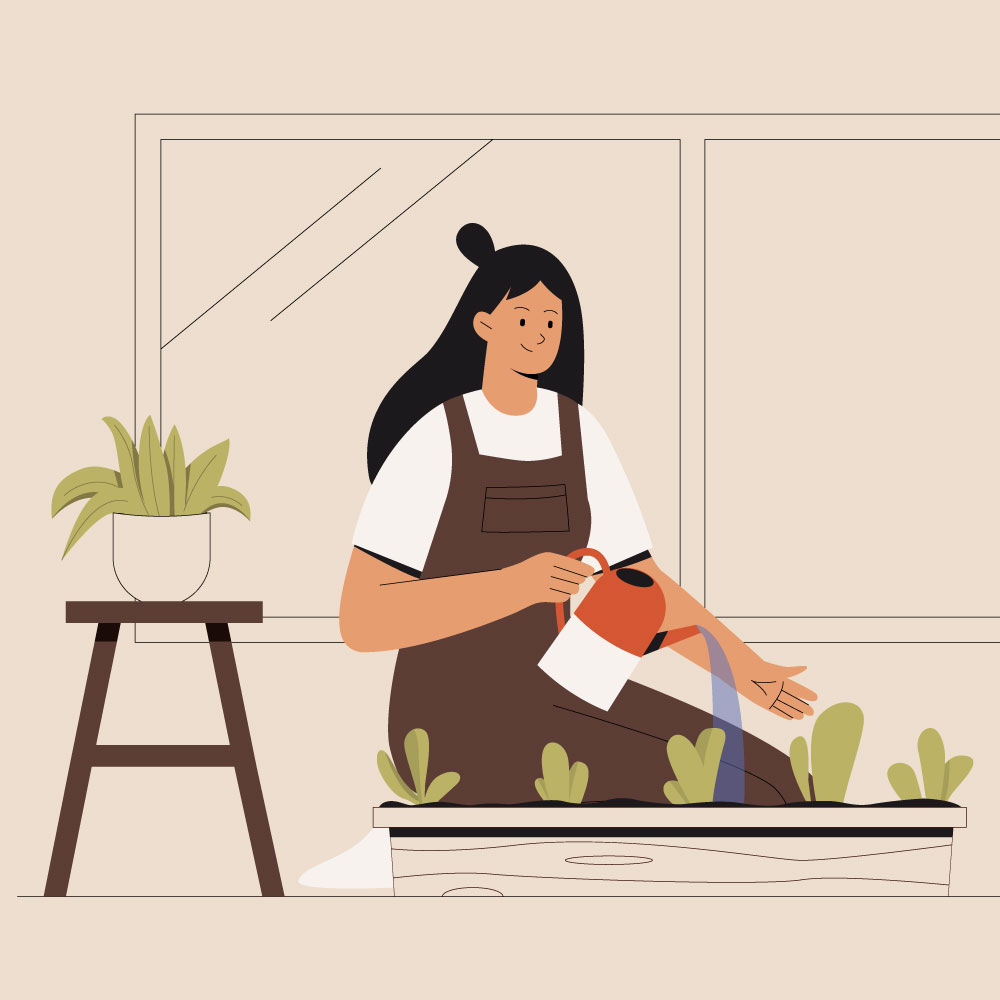
When growth feels slow, it’s not because God has forgotten you. It’s because He’s forming something beneath the surface: roots that can bear the weight of future fruit. Our role is not to rush the process but to remain faithful within it, continuing to water with prayer and diligence. Over time, what once felt buried will break through.
Viewing creativity as performance, striving for grades and accolades, causes us to miss the deeper opportunity. God created the world out of an overflow of love. When we create, we share the beauty of our Creator with a world in desperate need.
Beginnings excite us and endings satisfy us, but the in-between is home to formation. The waiting seasons humble us with lessons on deeper dependence, revealing what we believe about God’s character.
Every blank page and uncertain first step invites us to participate in God’s creativity and rest in His sovereignty. He is both the Artist and Gardener, shaping and tending, until the work reaches completion.
So, plant your seed. Water what’s been entrusted to you. Then step back in faith and let the Master Artist do what only He can do.
For Further Study
God shapes our creativity through community. Engaging with others’ wisdom and experiences deepens our understanding and provides encouragement as we wait for our own seeds to bloom.
Read:
- Art and Faith: A Theology of Making by Makoto Fujimura
- Every Good Endeavor: Connecting Your Work to God’s Work by Timothy Keller
- A Million Little Ways: Uncover the Art You Were Made to Live by Emily P. Freeman
You May Also Like