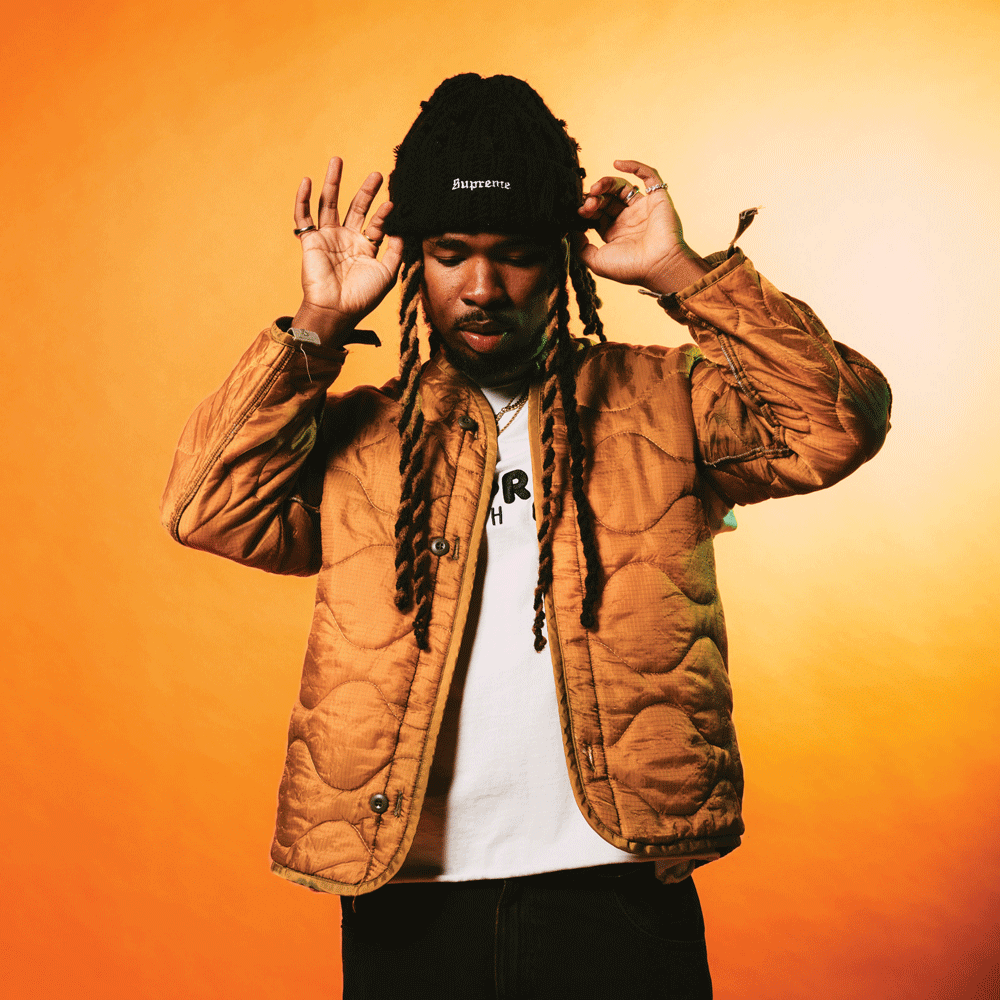
Q&A With Nobigdyl.
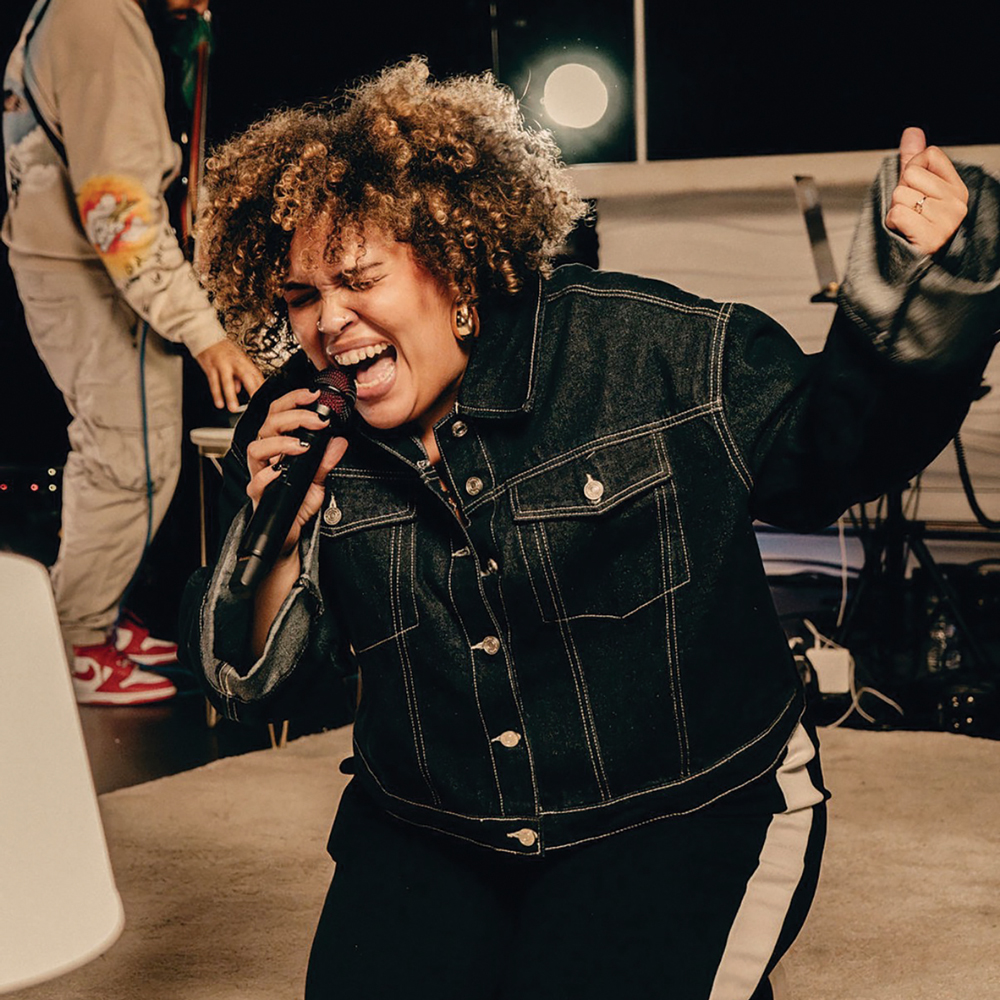
“The concepts and the lyrics that people hear in my music — that’s what’s been going on in my heart.”Nobigdyl. is a Christian hip-hop artist and rapper. His latest projects include SEOUL BROTHER and an unplugged, live album in 2025. He combines concept-driven lyricism with eclectic production, pulling from trap, jazz, hip-hop, and underground to create his own sound.
PEER: How did you come to know Jesus? Did you always grow up in the church?
NOBIGDYL: I was raised in a Christian family, always going to church. My mom was always taking us to church. I moved around a lot when I was young — I lived in nine different states. So, the first thing that Mom would try to find every time we moved was the church and what school we were going to. That was always part of my life, that’s what I was raised in.
I mean, I’m very grateful for that, and in some ways, it made it difficult to come to my own knowledge and relationship with Jesus Christ because I associated being a Christian with just being a good kid, like being obedient to my parents, trying to stay out of trouble, getting good grades. Yes, I’m a Christian, but it was very cultural Christianity for me growing up. That doesn’t survive when real temptation comes.
I was protected from a lot because I was raised in a Christian family, but my faith still had to become my own, and that happened in my teenage years. Once I graduated from high school, I went to college, and my family moved to another state. So, it was essentially like I had gone away for college. And with all of those guideposts and rhythms of going to church and things like that, I didn’t have somebody that was forcing me to do these things anymore. It really became a question of whether I was going to continue in that or go do my own thing.
I’m raised in the South, so it’s pretty comfortable to be a Christian. It’s not costly at all. That’s just going with the flow of culture. It’s cultural capital to be Christian in a lot of ways — path of least resistance, so I was like, “Oh, I’m still going to go to church and be a Christian. But I’m also going to live whatever life I want to live as far as, like, college, relationships, and what I’m pursuing.” I’m just pursuing my passions. And whatever I do that’s morally not in line with Christ, or even my mindset or my heart motive, I can hide that and do the Christian facade thing, and go through the motions, and keep all my friends.
So that little thing ended up meaning I’m living a double life — like, I’m this good Christian guy, but I’m promiscuous, and I’m just sinning.
I was sinning and covering it up. And then I heard a sermon where a pastor was preaching on James 2, where he says if you believe there’s one God, you do well, even the demons believe and shudder. And then the rest of the sermon was about an intellectual acknowledgement of God existing being different than the belief that God is who He says He is.
That was the moment that I actually gave my life to Jesus. That was the moment of repentance. That was the moment of, “Okay, playing church — it’s not enough.”
P: Who or what are your musical influences?
NBD: Man, it’s so eclectic. It’s all over the place. I come from a family who loves music. I grew up in a house that was listening to gospel music like Fred Hammond or Kirk Franklin, but others, like all the way to Elton John and James Taylor. My mom and dad were hip-hop heads, so, like, 90s hip-hop. My grandfather was a musician. My uncle was a musician — a jazz musician. So, it was just all types of music all throughout the house and the family. Elton John is one of my favorite artists ever. So that’s a big influence. Coldplay is a big influence. Kanye West, Chance the Rapper, Third Eye Blind — kind of all over the place. Anything that has a lot of melody and especially story, like concepts. Deep stories have always really captured me. I’ve always been so into lyrics. I’m a person who’s more into the verses of a song than the hook of a song.
P: What drives you in making music, writing lyrics, and mixing various styles and genres?
NBD: I think growing up all over the U.S. goes into that. That’s why I’m pulling from a whole bunch of different music subcultures. But like I said, I’ve always just been personally captured by story and narrative, especially in music and lyrics.
P: How do you begin your creative process? Do you start with a beat, a melody, a lyric, a message?
NBD: When I’m actually putting the song together — the production, either if it’s a beat or if it’s sometimes I’m writing to like a melodic motif or with a musician present — the music first is what kind of draws the lyrics and the concept out. But I always say, as songwriters, we’re always writing our music. It’s not like it just happens in a vacuum. It’s the conversations you’ve had recently. It’s the life you’ve lived. It’s what’s going on in the world, what’s been going on in your mind and your heart recently. Like the lyric and concept portion is just being written all the time. Then the music is what draws the concept out of what’s already going on internally.
P: How does your faith play a role in that creative process and making music and writing lyrics? How does your quiet time with God influence your creative process?
NBD: Whatever’s already going on in your mind or your heart is going to be drawn out in the creative process and in the recording session. The only thing you can talk about is what’s already inside — if you’re being authentic, unless you’re just copying something. The concepts and the lyrics that people hear in my music — that’s what’s been going on in my heart. That comes from spending time in scripture, in prayer, in community, and in wrestling with these concepts, talking to God regularly. It’s less like going into the session and opening up the Bible and being like, “Okay, we’re going to write a song about this today.” But it’s what I’ve already been talking about with my community, with my family, with my friends, and with God about along the way.
P: What inspired your latest project, SEOUL BROTHER?
NBD: SEOUL BROTHER is a pretty special project. As far as the creative process, a lot of the best creativity comes from boundaries and obstacles. A lot of times, artists’ best albums are like their first few albums. That’s because, one, they’ve been writing them their whole life, but also because there are a lot of obstacles against them, like nobody has heard them yet. That breeds creativity. It’s almost like the boundaries breed creative ways to tell the story and to connect with people that haven’t gotten there yet. And then we also see with artists, once they’ve made it, a lot of times, their stuff becomes less compelling because they kind of know, “Well, if I put it out, like people are going to listen to it, right?”
So SEOUL BROTHER was kind of like that. That’s a project with the producer, Kato On The Track, and we wanted to create creative boundaries to push ourselves creatively. We got together and we said, we’re going to do a project in seven days. Whatever we make in those seven days is what’s going to come out. That automatically puts a time constraint on me. Whereas I’m typically an artist who really likes to rewrite and workshop stuff, but because of that commitment, I didn’t have that luxury. It’s like I’m having to go with my initial instincts on writing, and that actually creates a different product than if I know I have six months to work on a project.
So that was pretty cool, that aspect of it. It came together really well. Project Pat was on it, which was a really cool moment. SEOUL BROTHER, the concept is kind of play on words, because Kato On The Track is from Korea. So that’s why it’s like soul-like. But then also SEOUL BROTHER connected through the essence of who we are.
P: What does it mean for you to be a Christian rapper in 2026, in today’s music industry, especially as an independent artist?
NBD: Whatever is in your mind and your heart is what should come out into your artwork, your creativity, what you are presenting to the world. I think my main concern is deepening my relationship and my love and my trust with Jesus daily and then using the gifts that He’s given me to excellently and freely create. Because if I, as a person, am grounded in that relationship, and even in that obedience, then what I produce is going to be the fruit of that relationship.
I say that to say, I’m not always thinking about like what would a Christian rapper do in this situation, or how do I represent Christian rap? I’m just more focused on the relationship with Jesus and then moving excellently, inviting Him into the creative process, into the studio, and into the rollout and all of that. I’m one of those artists who you can call me whatever, as long as you’re listening to the music. You know what I mean? As long as the music is glorifying to God.
I have no problem with somebody calling me a Christian rapper, the same way I have no problem if somebody doesn’t necessarily use that term. You can put yourself in a box with how you present the stuff. But I think people just calling me a Christian rapper doesn’t actually, for me personally, it hasn’t prevented me from anything.
P: What do you hope that young listeners take away from your music?
NBD: I want them to see what a life with God, an honest life with God, is like. I think that for me, a lot of music in general, but especially Christian music, it’s almost like the pretty parts of life, or even just the acceptable topics to talk about. We leave a lot of stuff on the table, like romantic relationships, like some of the sins that are not kind of sanctioned to talk about in public or on the radio or whatever.
When we do that, if we say, “Well, we don’t have anything for romance or breakups or we don’t have anything for when you’re really crashing out in anger,” then the listener who experiences the full human experience and all of human emotions is not going to listen to this music. We’re creating a vacuum where they’re going to go to other music to deal with those emotions, to help shape their worldview. Because that’s what happened to me when I was coming up. It was like, well, I don’t always feel like what Fred Hammond is talking about. I guess I’m going to listen to Lil Wayne, and I’m going to understand relationship dynamics from mainstream rappers.
Whereas if we talk about every aspect of life, the good, the bad, and the ugly, then people don’t have to get those ideas from outside of the faith. I think that’s just one thing that I’m really passionate about. We can talk about politics, we can talk about depression, we can talk about relationships. Whatever it is, let’s talk about it and invite Jesus in the room as well.
P: What helps you remain grounded as your platform, as your influence, grows?
NBD: Community — solid community. That how God designed us to be. He calls the church His body. He didn’t use that term for no reason. We’re supposed to be integrated. We’re supposed to depend on each other, just like the different parts of the body depend on each other. I’ve been with my church community for going on 11 years, and those are the people that keep me grounded, along of course, with my wife and family. But for the Christians specifically, I cannot stress enough how needed the local body of believers is for us.
P: If you could go back and give a piece of advice to your younger self, your 18-year-old self, what would you say?
NBD: I think it would be being radically vulnerable and honest in Christian community. Like just dropping the facade, like dropping the ceremony and just getting in with the Christian community and going deep with just two or three people. Obviously, you want to be honest with all of your Christian community but get two or three people that there’s no stone left unturned; those that you can trust with, that won’t heap shame on you but will love you and correct you and walk with you through all the parts of life.
P: Are there any songs, albums, playlists, artists on repeat right now?
NBD: There’s an artist named Sondae. Everything that he’s putting out right now is incredible. Definitely got Sondae on repeat. I have Olivia Dean on repeat right now. I love her new album. I think that’s probably my top two right now.
P: What’s a small gesture that you do to show your loved ones that you appreciate them?
NBD: I’m a quality time guy. I really like spending time with people. Especially now, where everything is so fast now with social media — the Internet in general — and how people interact. It’s almost like the simplest stuff means the most to people now. Like just being like, “Hey, we’re just going to sit by a fire for five hours, and we’re just going to talk.” And you have my whole attention. My phone’s not even here. It’s in the house. That really intentional quality time means a lot to me. I think increasingly, it means more and more to people to have those like really, almost mundane human moments.
P: What’s a Bible verse that’s been on your heart recently?
NBD: This is really going to sound weird for this type of question, but it’s true. John 1:1 (NIV), “In the beginning was the Word and the Word was with God and the Word was God.” I’ve been studying the deity of Christ. It’s something that we take for granted. But when we’re in dialogue with other religions, or even different parts [denominations] of the Christian religion, it’s very important to really understand why we believe and what we believe about Jesus, and the fact that everything was created through Him and for Him. And that God has always been triune. And because God has always been triune, that means that God has always been loving. Like we think of God as love, but He has always actively been loving, even before there was creation, because there was a Trinity, God was continually loving. There’s never been a time when He wasn’t; that affects our whole faith.
This interview has been edited for length and clarity. Follow nobigdyl on Instagram @nobigdyl.
You May Also Like